


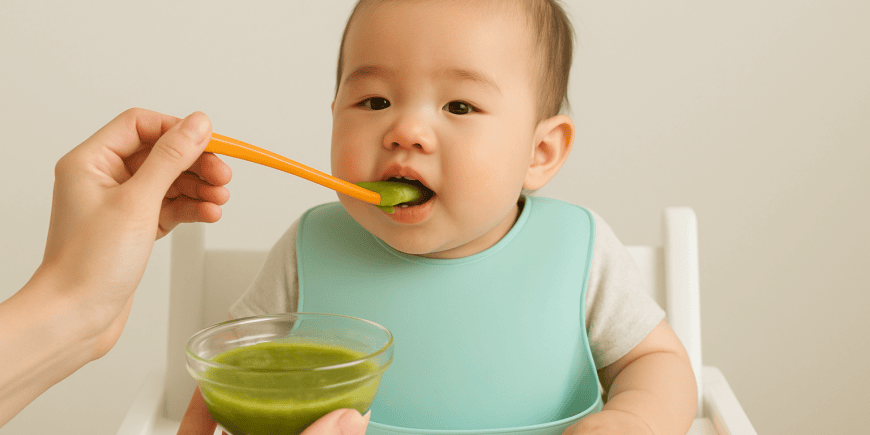
A Thoughtful Weaning Journey, Guided by a registered Dietitian
Starting solids is an exciting milestone! But it’s more than just a change in what your baby eats. It’s the beginning of a lifelong relationship with food. At Bright Leaders, we take weaning seriously — not just because of nutrition, but because early food experiences shape habits, preferences, and even confidence.
When Should Weaning Begin?
Many believe that all babies start solids at 6 months, but in reality, every child is different.
At Bright Leaders, we don’t rely on a fixed age. Instead, our dietitian assesses each infant’s readiness based on developmental cues such as:
- Ability to sit with support
- Good head and neck control
- Interest in food and ability to swallow semi-solids
- Loss of the tongue-thrust reflex
If a child shows signs of readiness before 6 months, we may recommend starting the weaning journey earlier, in close collaboration with parents.
Why Proper Weaning and First Foods Matter
The first foods your child eats can influence their:
- Gut health and nutrient absorption
- Taste preferences and food acceptance
- Texture tolerance and chewing skills
- Long-term eating habits and relationship with food
Our weaning menu is designed by a qualified dietitian and thoughtfully planned to avoid overly plain or nutrient-poor meals. (Spoiler: we don’t just serve plain porridge!)
We focus on:
- Balanced textures and gradual progression
- Iron-rich and whole food options
- Introducing vegetables, fruits, and protein with intention
- Sensory exploration—because touching, smelling, and playing with food matters too!
The Family Table Matters Most
Here’s something many forget: children learn how to eat by watching others.
Even with the best meal plans in a childcare centre, if the family environment at home is disconnected, rushed, or filled with food pressure, it will have a greater impact on the child’s eating habits than what they eat during the day.
That’s why at Bright Leaders, we always involve parents in the weaning journey. We guide families with simple tips like:
- Eating together, without distractions
- Letting your child explore (even if it’s messy!)
- Avoiding pressure or bribing with food
- Modeling enjoyment when eating vegetables or new foods
Because what happens at home matters more than we think.
A child who grows up seeing vegetables as normal, positive, and enjoyable is more likely to eat them — Because they want to, not because they were forced to.
What If My Child Is Already a Picky Eater?
You’re not alone. Picky eating is common, and often rooted in early food experiences, pressure at the table, or emotional responses around eating.
That’s why we’ve included food-positive interactions as part of the EmpowerMe Program. In our daily routines, we:
- Encourage children to explore new foods without pressure
- Let peers eat together and share positive comments about food
- Use storytelling, role-play, and food-themed play to build comfort
- Never force, bribe, or shame a child for not eating something
We believe that a child who feels safe with food will try new things when they are ready.
A Lifelong Impact
Your child’s first meals are more than just nutrition—they’re memories, lessons, and habits in the making.
At Bright Leaders, we support this journey with professional care, family collaboration, and gentle guidance. Because the right food, introduced at the right time, in the right way, can build not just healthy bodies — but happy, confident eaters for life.
 Previous Post
Leave Your Comment